
Specialized AI vs. Tech Goliaths: Securing the "Unfair Advantage" for Cyberdefenders
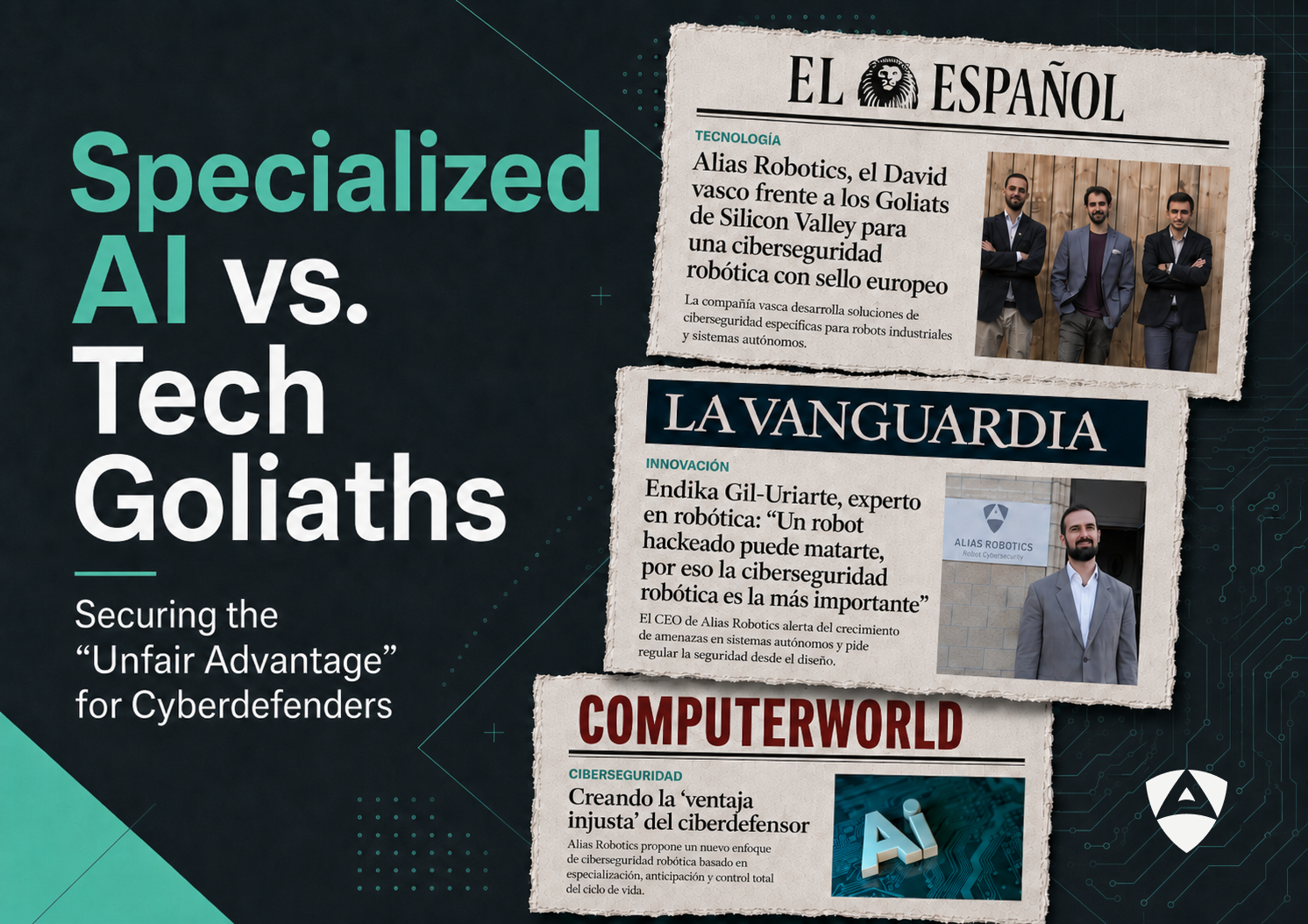
For decades, the industry accepted that cyberattackers always held the upper hand. We are shattering that dogma. Explore how specialized, on-premise AI is turning the tables on generalist tech giants, backed by our recent features in La Vanguardia, El Español, and ComputerWorld.
For decades, the tech industry has accepted a disheartening dogma as if it were a law of physics: the attacker always holds the upper hand. The intruder only needs to find a single crack, while the defender must protect an entire, ever-expanding perimeter. However, the rise of specialized Artificial Intelligence is forcing us to challenge this premise for the very first time.
The cybersecurity landscape has become the latest playground for generalist tech giants pushing massive, cloud-dependent Large Language Models (LLMs). As regulatory bodies like the European Central Bank (ECB) urge organizations to fortify their digital lines before these generalist LLMs are weaponized by bad actors, many European enterprises are falling into a dangerous marketing trap: outsourcing their critical defense to foreign, one-size-fits-all AI infrastructure.
At Alias Robotics, we are rewriting this narrative. The historic paradigm that the attacker always wins vanishes when the defender operates at machine speed with specialized, sovereign tools. We are shifting the scales to deliver what we call the "unfair advantage" to the defensive line.
📊 Alias Robotics at a Glance (2026 Impact Metrics):Proprietary Dataset: 18.07 Terabytes of real-world telemetry (25M+ hacker prompts from 100+ countries).Response Speed: Forensic incident resolution in <30 minutes (900x faster than manual operations).Cost Efficiency: Proven savings of up to 6,000x in incident management.Global Footprint: Over 300 clients across 5 continents.
David vs. Goliath: Why Specialized AI Beats Trillion-Parameter Models
In our latest feature with El Español, we were described as the "Basque David facing the Goliaths of Silicon Valley." This isn't just about regional pride; it's a fundamental architectural truth.
When enterprises pipe sensitive infrastructure data into giant US cloud models like Claude or GPT, they unknowingly turn themselves into data harvesters for third-party nations. Corporate credentials, network topologies, and access keys are routinely leaked beyond European legal frameworks. Meanwhile, these very tech giants are feeling the pressure from free, highly competitive Chinese open-weights models, leading them to lobby for protective regulations under the guise of safety, while using cybersecurity as mere marketing fluff.
Our approach cuts through the noise: on-premise AI sovereignty. We don't need massive data centers to protect your perimeter. Through our Cybersecurity Superintelligence Suite (CSI), fueled by Europe's largest dedicated cybersecurity dataset, we deploy hyper-specialized agentic solutions that run locally within the client’s network.
| Feature |
Generalist LLMs • Silicon Valley • China |
Alias Robotics CSI Specialized AI |
|---|---|---|
| Infrastructure | Massive Clouds (Trillions of parameters) | On-Premise / Local CPU (5B parameters) |
| Data Privacy | Risk of third-party leaks & sovereign exposure | 100% Air-Gapped (Data never leaves your perimeter) |
| Reaction Speed | Cloud latency / Generalist triage | Machine speed (Forensics solved in <30 mins) |
| Operational Focus | Text, code, and generic prompts | Hyper-specialized in the "art of hacking" & ROS 2 |
Our most disruptive line of research proves that size doesn't equal security. We are rolling out highly efficient 5-billion-parameter models capable of running natively on conventional CPUs. By the end of 2026, these optimized agents will execute privately on standard business hardware or even smartphones, keeping your defense entirely under your own roof.
Live Fire Proof: The Attack Success Rate Dropped to 0%
As we emphasized in our recent op-ed for ComputerWorld, if a defender can operate seamlessly at autonomous machine speed, the attacker fails. This isn't theoretical; it was proven under the most rigorous conditions during Locked Shields 2026, the world's largest live-fire cyberdefense exercise organized by NATO’s CCDCOE, featuring 4,000 experts from 40 countries.
Tasked with protecting the critical infrastructure of the fictional nation of Berylia against relentless, nation-state-grade attacks, our Cybersecurity AI stack leveled the playing field:
- OODA Loop Compression: Our localized agents accelerated the Observation, Orientation, Decision, and Action cycle to out-pace automated threats.
- Radical Local Efficiency: Operating completely on-premise, our
alias2-minimodel processed 3.5 billion tokens without cloud latency. Forensic challenges that traditionally drain 4+ hours of a senior analyst’s time were solved by our AI in under 30 minutes, effectively cutting the attacker's success rate to zero. - Global Recognition: This masterclass in autonomous usability was a primary driver behind the Spanish delegation leading the international NATO usability rankings this year.
The Physical Stakes: Why Robotic Security is Non-Negotiable
This machine-speed "unfair advantage" becomes a matter of life and death when applied to physical automation and industrial machinery.
Speaking with La Vanguardia, our CEO, Endika Gil-Uriarte, highlighted a distinction that corporate boards often overlook: the difference between Safety and Security.
“Safety is about ensuring the robot doesn't harm its human environment through accidental malfunction. Security is about preventing the digital environment from corrupting the robot's physical operations. If an attacker compromises the safety sub-systems of a heavy collaborative robot or a hydraulic press, the danger is physical, immediate, and potentially lethal. A hacked robot can kill you.”
Drawing from Endika's foundational work in translating biological resilience to automation via our Robot Immune System (RIS), we know that robots must be protected from the inside out. Under upcoming European mandates like the Cyber Resilience Act (CRA), certifying bodies are now deploying our AI to audit architectural vulnerabilities before industrial machinery ever hits the factory floor.
Today, these specialized defense agents protect over 300 industrial sites globally, actively safeguarding maritime logistics, stabilizing power grids, and shielding financial transaction layers for organizations that need to achieve maximum resilience with streamlined security teams.
Macroscopic Validation: The Echo from Davos
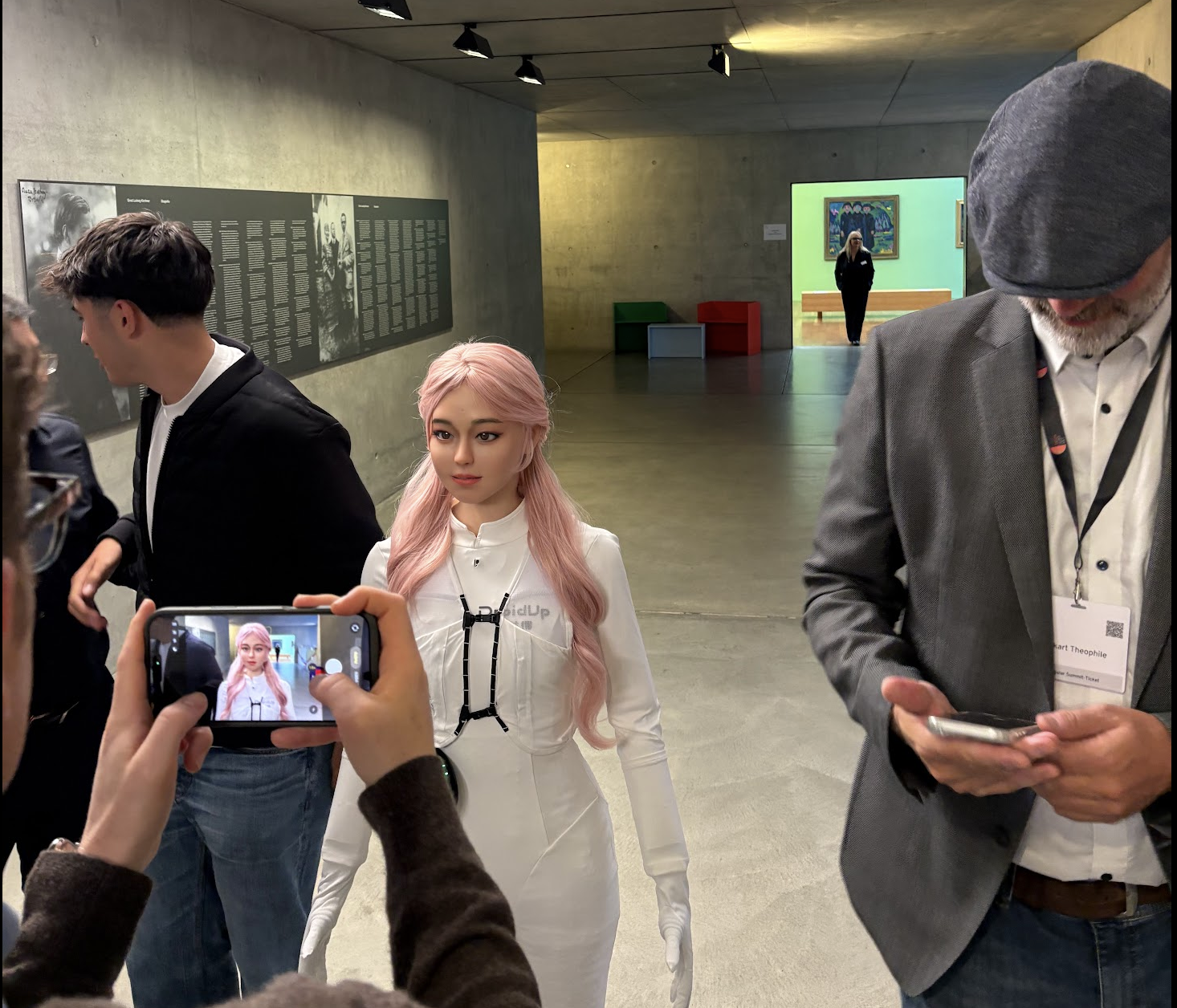
This operational reality perfectly mirrors the high-level discussions taking place on the global stage. During the recent Davos Tech Summit 2026 in Switzerland, our Founder & Chief Scientist, Víctor Mayoral-Vilches, took the
Impact stage to present "Cybersecurity and Sovereignty for Robots and Autonomous Systems." Standing alongside leaders from NVIDIA, NASA, and Stanford, our presence reinforced a critical geopolitical macro-trend: true industrial resilience cannot co-exist with technological dependency. The spectacular automation displayed at Davos's "Robot City" exhibition means nothing if the underlying systems can be remotely paralyzed by a foreign adversary or a sudden cloud outage.
Conclusion: Securing the European Frontier
True technological sovereignty cannot be purchased via foreign cloud subscriptions that turn our industries into data mines for external superpowers. It is built from the ground up by backing local engineering talent and deploying dedicated, uncompromised infrastructure.
The era of the defensive underdog is over. By focusing on hyper-specialization, on-premise execution, and autonomous machine-speed response, the advantage has finally swung to those who control the core technology. The autonomous industrial revolution is here, and we are ensuring Europe holds the keys to lock it down.
🚀 Fortify your automated and critical infrastructure against the threats of tomorrow. Explore the localized capabilities of our Cybersecurity Superintelligence Suite (CSI).